Bitcoin’s Institutional Adoption Paradox
Jan. 23, 2026
Author: Matt - Lead Analyst
Bitcoin was created with a number of core principles. We do not need institutions. We do not need banks. We do not need to trust anyone except mathematics. Yet Bitcoin’s survival has become almost entirely dependent on the very institutions it was designed to escape. Billions of dollars are now held in ETFs and treasury company balance sheets. Governments are building strategic reserves, and banks are creating Bitcoin-based derivatives. This institutional adoption has provided Bitcoin with political protection and regulatory clarity necessary for survival, but at the cost of the privacy, decentralization, and self-sovereignty that defined Bitcoin’s original vision.
Regulatory Responses
Bitcoin’s protocol worked perfectly from day one. The code was sound, and the mathematics were elegant. But Bitcoin failed at surviving hostile regulatory environments. In 2014, Mount Gox collapsed, not because Bitcoin’s protocol failed but because Bitcoin’s infrastructure failed. Mount Gox was a centralized exchange holding Bitcoin for customers, and when compromised, customers’ Bitcoin were gone. FTX followed, another catastrophe driven by centralized custody, fraud, and mismanagement. After each disaster, regulators stepped in. Custody standards were created, audits were required, and insurance was mandated. These regulations did not necessarily change Bitcoin, but they changed the infrastructure surrounding it.
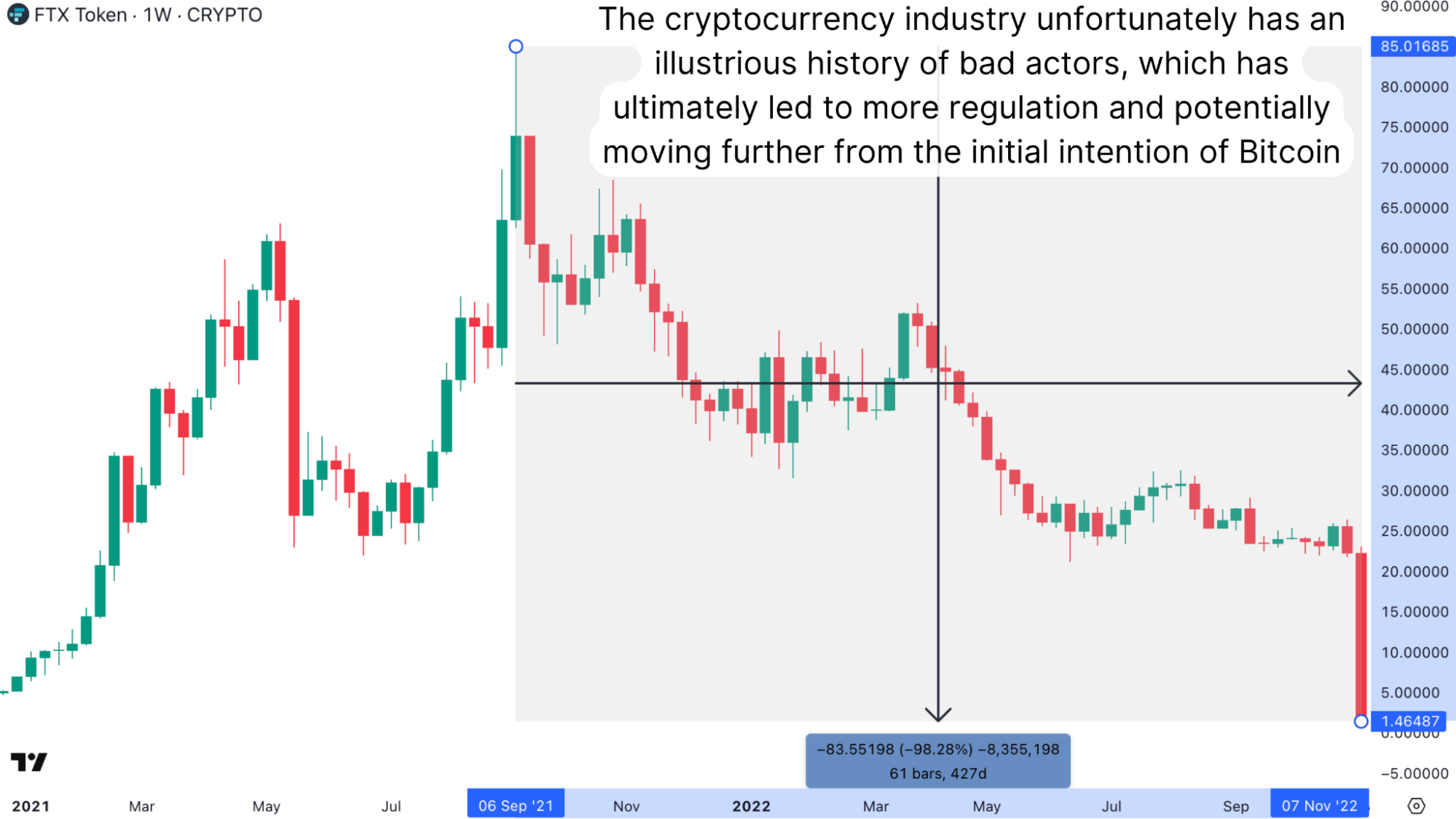
Figure 1: The catastrophic fall of FTX.
Bitcoin’s idealistic vision of being your own bank turned out to be too hard for most people. The path forward required integrating with institutions, accepting regulation, and gaining legitimacy to scale globally. Bitcoin faced a fork in the road: either remain pure, small, hated by governments and used primarily by individuals, or integrate with institutions, accept regulation, and gain legitimacy to scale.
Institutional Adoption
Bitcoin probably could not have survived without institutional adoption. Bitcoin needed regulatory clarity to transition from darknet curiosity to mainstream asset. The question for purists is whether Bitcoin can serve wealthy institutional investors and unbanked populations simultaneously. El Salvador tried to make Bitcoin legal tender, but the experiment largely failed. When given a choice between Bitcoin and existing money supply, people chose their existing money supply.
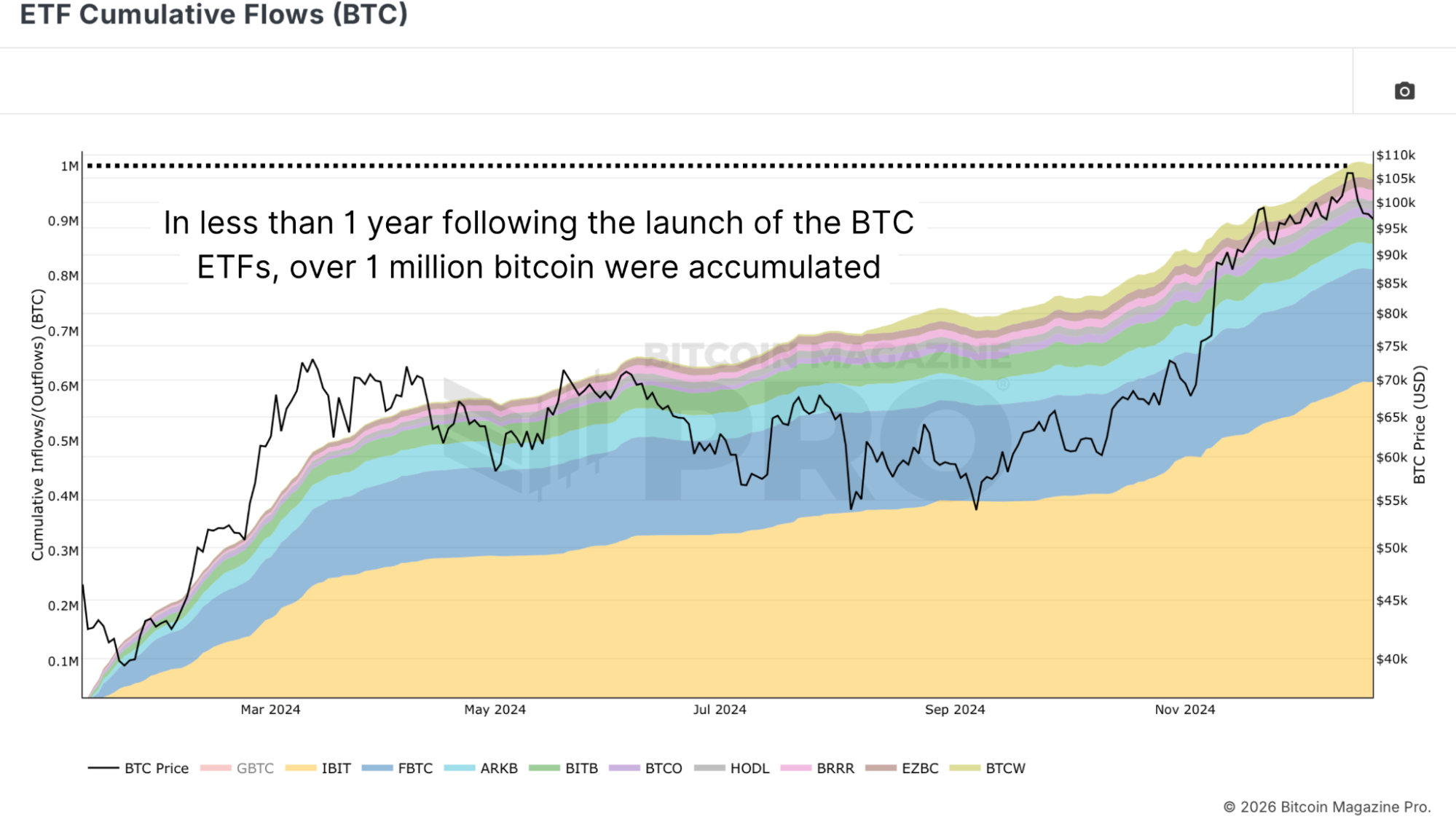
Figure 2: Since their inception, ETFs have accumulated over 1 million bitcoin.
A huge portion of recent growth has come via institutions, hedge funds, and family offices recognizing Bitcoin as a legitimate asset class. Retail investor social interest is almost non-existent by comparison. This institutional dominance raises fundamental questions about whether Bitcoin can ever fulfill its original vision of banking the unbanked when those with capital are increasingly controlling its direction.
Financial Privacy
The financial privacy that Bitcoin was supposed to enable has pretty much all been lost. You used to be able to easily buy Bitcoin in person from other users until that got shut down. Exchanges demand rigorous identification verification and KYC protocols, and even Bitcoin ATMs now require government-issued ID checks. Bitcoin was supposed to replace banks and governments to bank the unbanked, but instead, we are trending towards Bitcoin becoming another asset within the existing system.
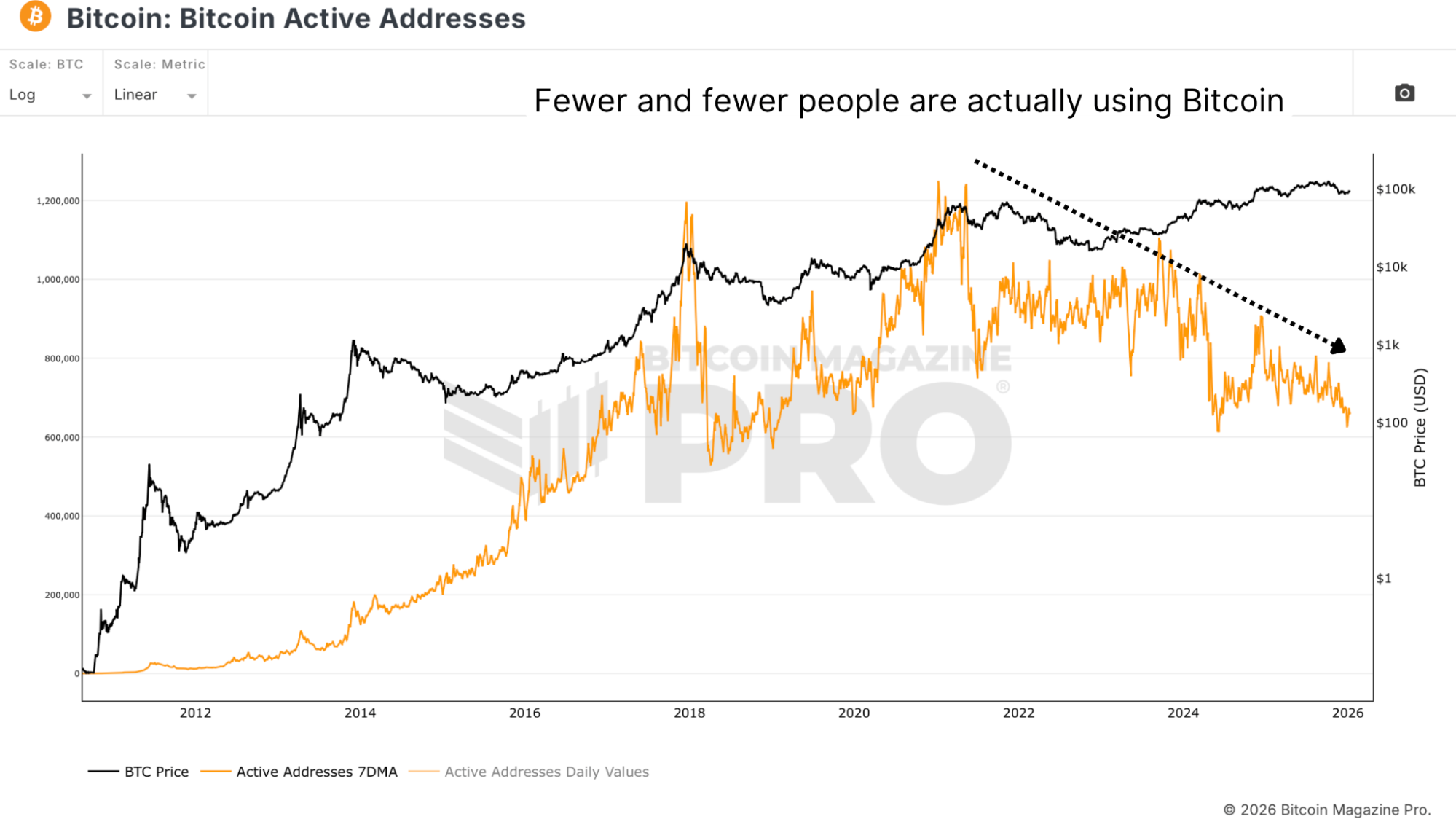
Figure 3: The decline in Bitcoin Active Addresses.
A considerable amount of Bitcoin is now held in institutional vaults and centralized custodians. You do not necessarily own your Bitcoin. You own the promise of Bitcoin from a centralized holder. We have unwillingly recreated the banking system we were trying to escape. We are once again trusting institutions with our capital. But institutional custody remains more convenient for the vast majority of users, so people choose convenience at the cost of compliance.
Bear Markets
Bull markets bring interest and excitement, and new money. They expand the base. But bear markets do something perhaps more important. Bear markets shift coins from those with low conviction to those with high conviction. People who bought Bitcoin as a get-rich-quick scheme simply give up. But people who believe in Bitcoin’s long-term vision hold or even accumulate further. Every bear market has strengthened Bitcoin’s conviction base. Every cycle has moved Bitcoin from speculators to believers.

Figure 4: The cyclical nature and continued expansion of Long-Term Holder Supply.
Conclusion
Could this have been different? Potentially, if we had chosen to reject institutional adoption and kept Bitcoin small, private, and hostile to regulation, but that Bitcoin would unfortunately be a lot smaller, less secure, and more easily attacked by governments. The path Bitcoin took towards institutional legitimacy was probably the only path available because survival depended on it. Bitcoin must adapt to survive.
Yet this adaptation comes with profound costs. Bitcoin, which was devised to resist central banks and fiat debasement, now almost relies on politicians and regulation. We are watching Federal rate cuts like Bitcoin depends on them. We have given up self-sovereignty and individualism in favor of corporate rule. The question remains whether we are relinquishing something truly fundamental to Bitcoin’s thesis just to suit those who make decisions that Bitcoin was created to counteract.
For a more in-depth look into this topic, watch our most recent YouTube video here:
Trojan Horse | The 131 Year Bitcoin #5
Matt Crosby
Director of Research & Analytics
Any information on this site is not to be considered as financial advice. Please review the Disclaimer section for more information.