Bitcoin Miners Capitulating, But Their Stocks Are Soaring
31 de julio de 2026
Author: Matt - Director of Research & Analytics
Bitcoin's hashrate has been sliding for months. Miner difficulty just took one of its steepest drops on record. Normally that's a pretty simple story, miners switching off rigs because the economics don't work anymore. Except the listed miners are having one of their best years as stocks, while BTC itself is getting hammered. In every prior capitulation, miner pain and price pain moved together. Now they've split, and I'm not sure the market has priced in what that means for hashrate long-term.
If you’re in a hurry:
- Hashrate is signaling one of the longest miner capitulation events ever.
- Miner Difficulty is down 19.9% from its peak, the third deepest decline since dedicated mining hardware arrived.
- Miner stocks have massively outperformed BTC over the past year despite offloading thousands of bitcoin.
- Block reward revenue in BTC terms just hit its lowest daily figure ever recorded.
- Average daily fee revenue over the past 28 days came in below the subsidy from a single block.
Capitulation Is Real
Only a handful of hashrate drawdowns in Bitcoin's history have run longer than this one. Miner Difficulty has followed it down, which is exactly what the protocol is built to do: every 2,016 blocks, or roughly a fortnight, the network resets the target so blocks keep landing near ten minutes apart. Fewer machines hashing means an easier target. It now sits 19.9% below the peak, and only two drawdowns since ASICs replaced GPUs have gone deeper than that.

Figure 1: Miner Difficulty sits 19.9% below its peak.
The only two comparable stretches ran for a similar time. The deeper of them came out of China's mining ban, which was about as legible as these events get. The state switched the machines off, hashrate collapsed, and anyone watching could work out what came next: the hardware would find cheaper power somewhere else and plug back in.
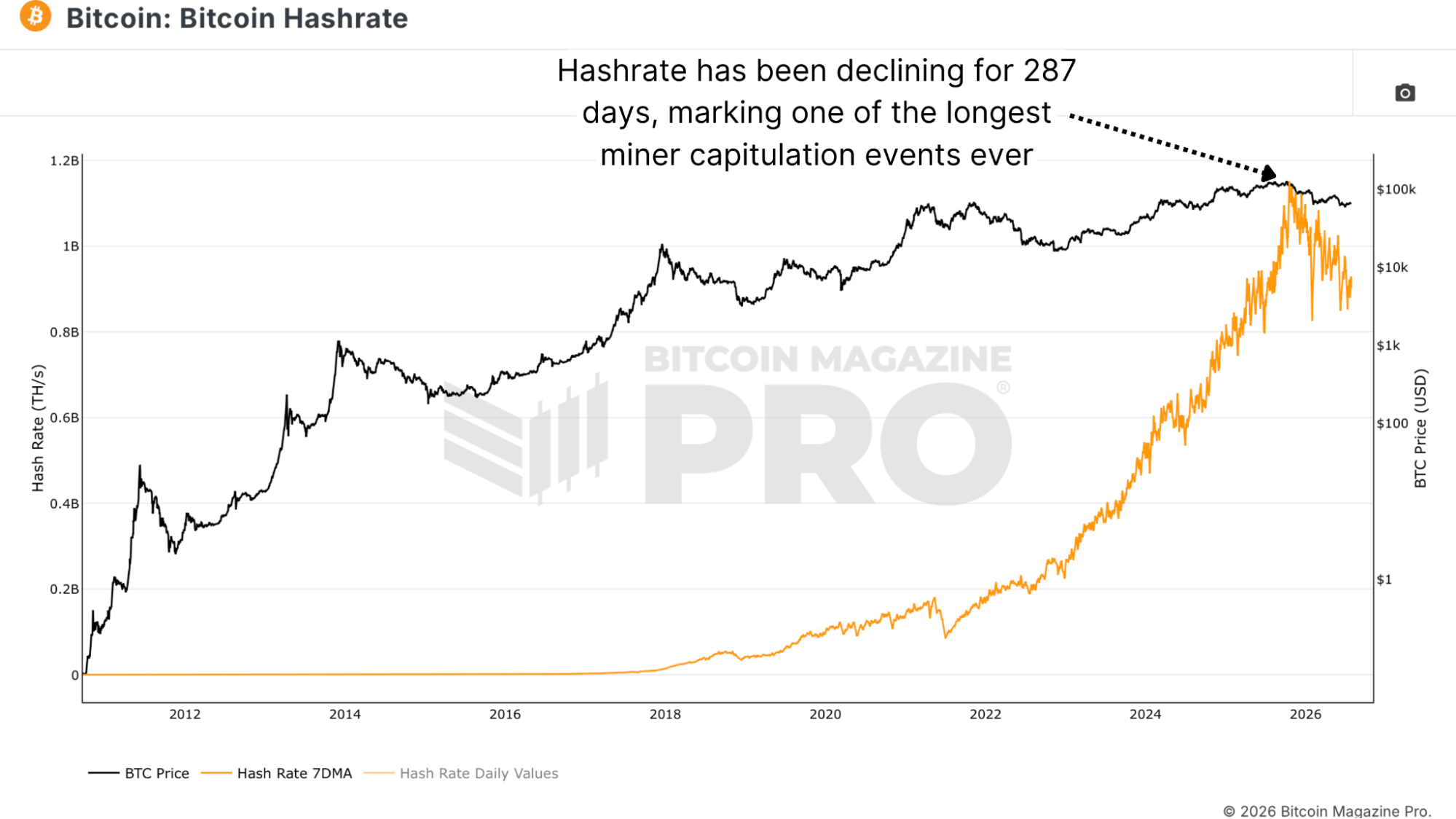
Figure 2: The Bitcoin Hashrate has been declining for 287 days.
Why The Stocks Are Up
BTC is down around 46% over the past year. Most of the largest Listed Miners are up massively over the same stretch, the best of them has gained more than 430%. That is not how this pairing normally behaves. Miner equities have historically traded as leveraged Bitcoin, falling harder in the drawdowns and running harder in the rallies, so a divergence this wide is rare.
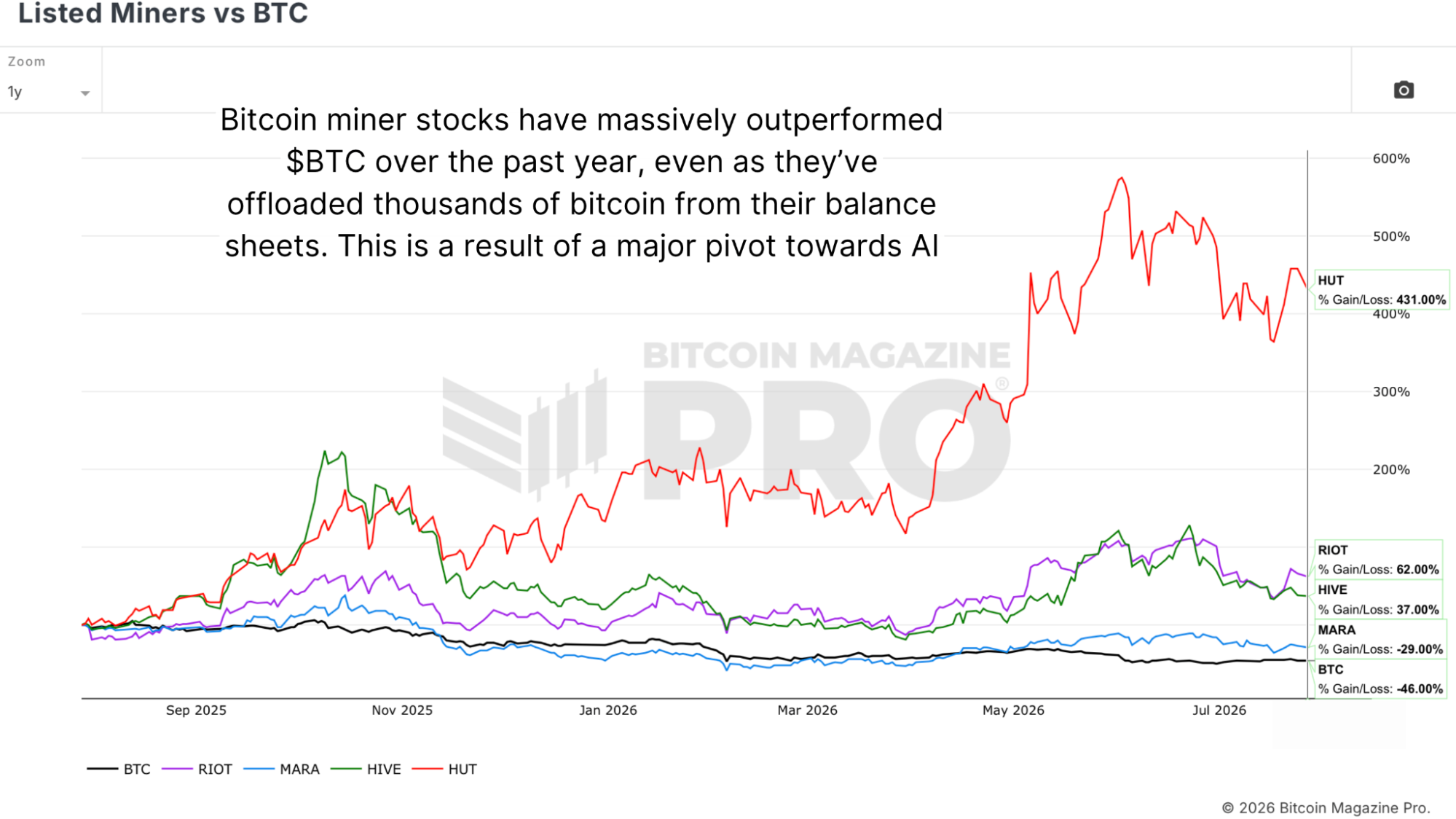
Figure 3: Listed Miners vs BTC performance over the past year.
AI is doing the work. For years Bitcoin and the largest AI ETF moved together, with the correlation at times reaching 0.8 or 0.9. That has since inverted: AI has rallied while Bitcoin sold off.
The Block Subsidy
Miners recently recorded their lowest-ever day of BTC-denominated revenue from Block Rewards. Some of that is the hashrate decline, with blocks arriving slower than ten minutes apart until difficulty catches up, but most of it is simply the protocol working as designed. The subsidy halves every four years, and it will keep halving until there is nothing left to issue.
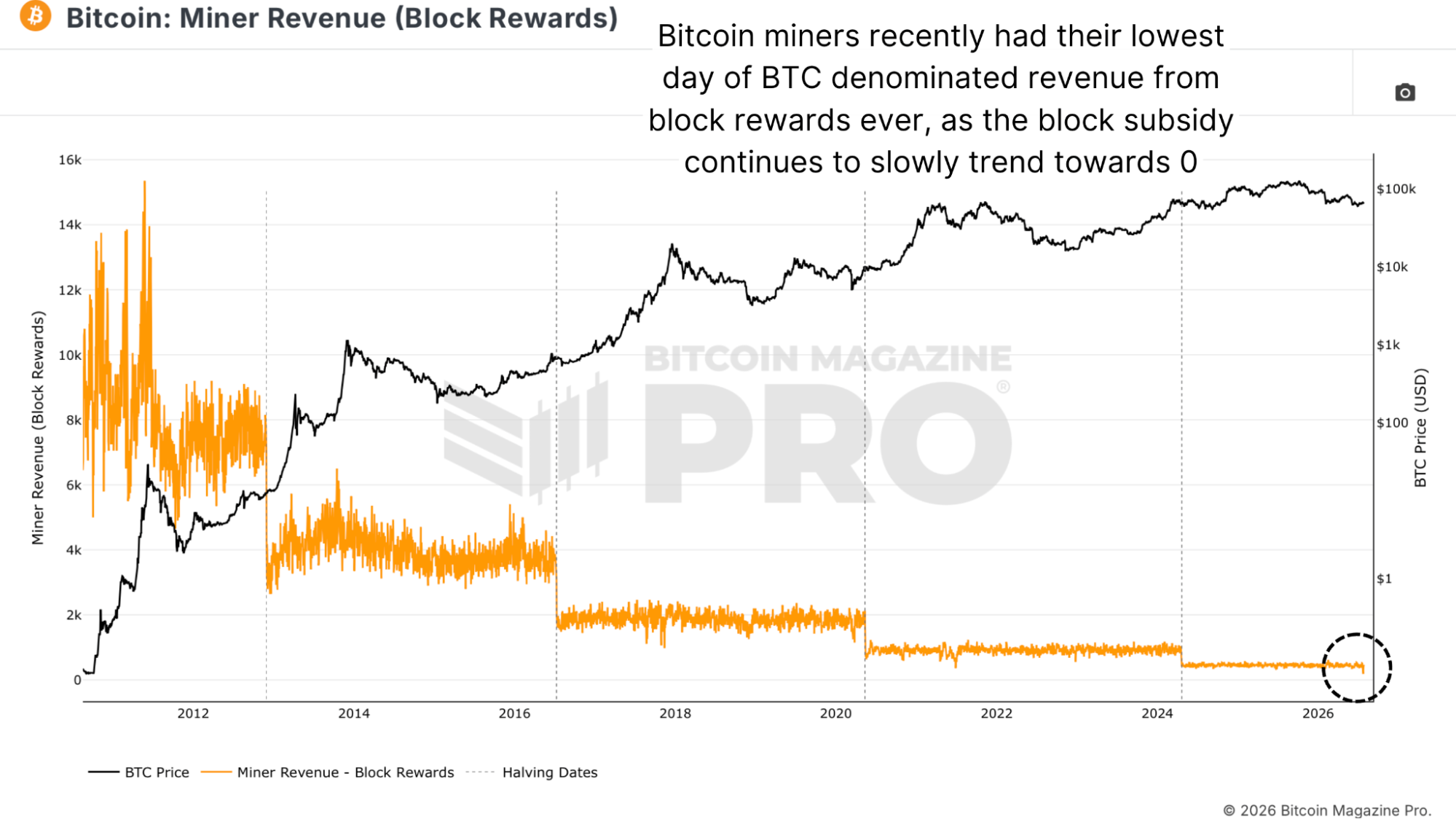
Figure 4: Miner Revenue (Block Rewards) in BTC terms has fallen to a new all-time low.
The counterargument, made every cycle since the first halving, is that price does the compensating. Fewer coins per block, each one worth more, dollar revenue holds. It has worked so far. The Puell Multiple, which compares current miner earnings against their trailing yearly average, sits near 0.75, so miners are taking in about three-quarters of what they averaged over the past year. Call it $30 million a day against a longer run average closer to $40 million.
Fill The Gap
Fees are the other half of the answer, and always have been. The subsidy eventually reaches zero, at which point fees have to pay for the hashrate on their own or the security budget shrinks with them.
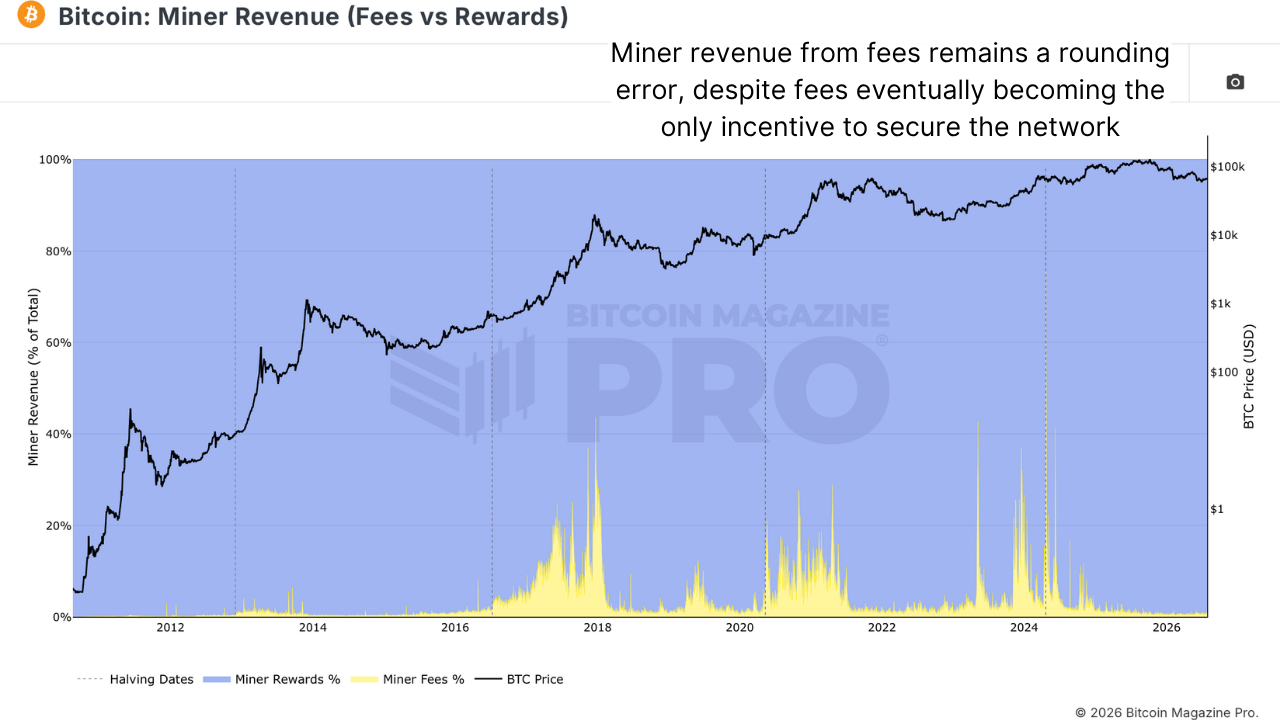
Figure 5: Miner Fees % as a share of total miner revenue.
The numbers are nowhere near that yet. Miners are earning roughly $30 million a day, of which fees contribute something around $200,000. Put differently, the average fee revenue over the past 28 days did not cover the subsidy from one block, and there are 144 blocks a day. Whatever the fee market eventually becomes, it currently pays for about ten minutes of the network.
What It All Means
Bitcoin is nowhere near a security risk today, and none of this is a call on price. But this capitulation is not shaped like the previous ones. Miners have simply found something more profitable to do with their hardware, and they have found it at the same time the price is down, the subsidy is shrinking, and fees are going nowhere.
Nobody needs another bearish narrative in a bear market, and I am aware that is roughly what this reads as! The counterweight is that bear markets are when this kind of question actually gets worked on. Long-term miner incentives will either be solved deliberately or left to higher prices to paper over.
Watch our most recent YouTube video here:
The 3rd WORST Bitcoin Capitulation EVER Is Only Just Beginning...
Matt Crosby (@MattCrosbyPro)
Director of Research & Analytics
La información contenida en este sitio no debe considerarse asesoramiento financiero. Por favor revise la Descargo de responsabilidad para más información.