Most Long-Term Holders Aren't Smart Money - The Data Proves It
26 de junio de 2026
Author: Matt - Director of Research & Analytics
There are currently over 16.6 million Bitcoin held by long-term holders, a cohort often referred to as "smart money." But the uncomfortable truth is that most of them aren't smart money at all. This week, I’m digging into what actually separates genuine smart money from everyone else.
If you don’t have time to read the full thing:
- Only 0.32% of all Bitcoin accumulated towards the lows is actually sold around the highs.
- Only 51% of all accumulation ever leads to selling at a higher price.
- Twice as much supply is bought at the top and sold at the bottom as the reverse.
- Genuine smart money accumulation peaks almost exactly at cycle bottoms, the opposite to ‘rookie’ investors.
The Problem With "Long-Term Holder"
The standard definition of a Long-Term Holder is simply someone who has held their Bitcoin for 155 days or more. It says nothing about whether they bought well. Plenty of people who bought the exact top of a cycle and held on through the entire drawdown qualify as long-term holders, not because they're sophisticated, but because they're underwater and waiting.
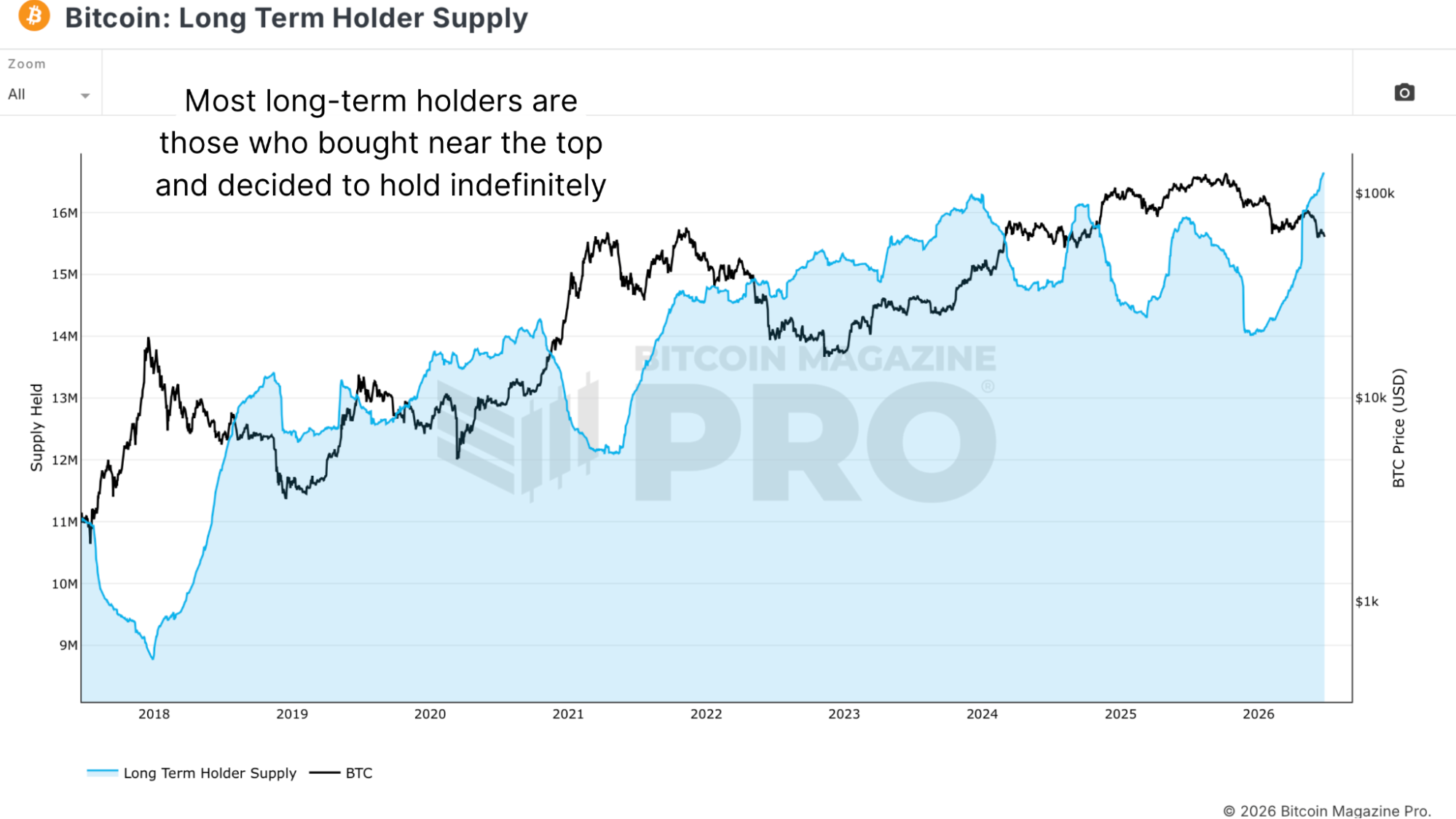
Figure 1: The 155-day definition captures cycle-top buyers holding underwater positions.
A more meaningful way to separate the experienced from the inexperienced is to look at where people accumulate relative to Bitcoin's average cost basis. Those consistently buying at or even below the Realized Price, when the average holder is at a loss, are demonstrating something closer to genuine insight. Those buying when valuations spike are typically doing the opposite.
Raw Valuations Mislead
One mistake a lot of people make is fixating on raw valuation levels and deciding, for example, to sell when a metric like the MVRV hits a value of seven. The problem is that these levels mean different things in different cycles. In 2017, the MVRV went from around five or six to ten in under a week. The raw number spiked, but the amount of time Bitcoin actually spent at those elevated levels was tiny.
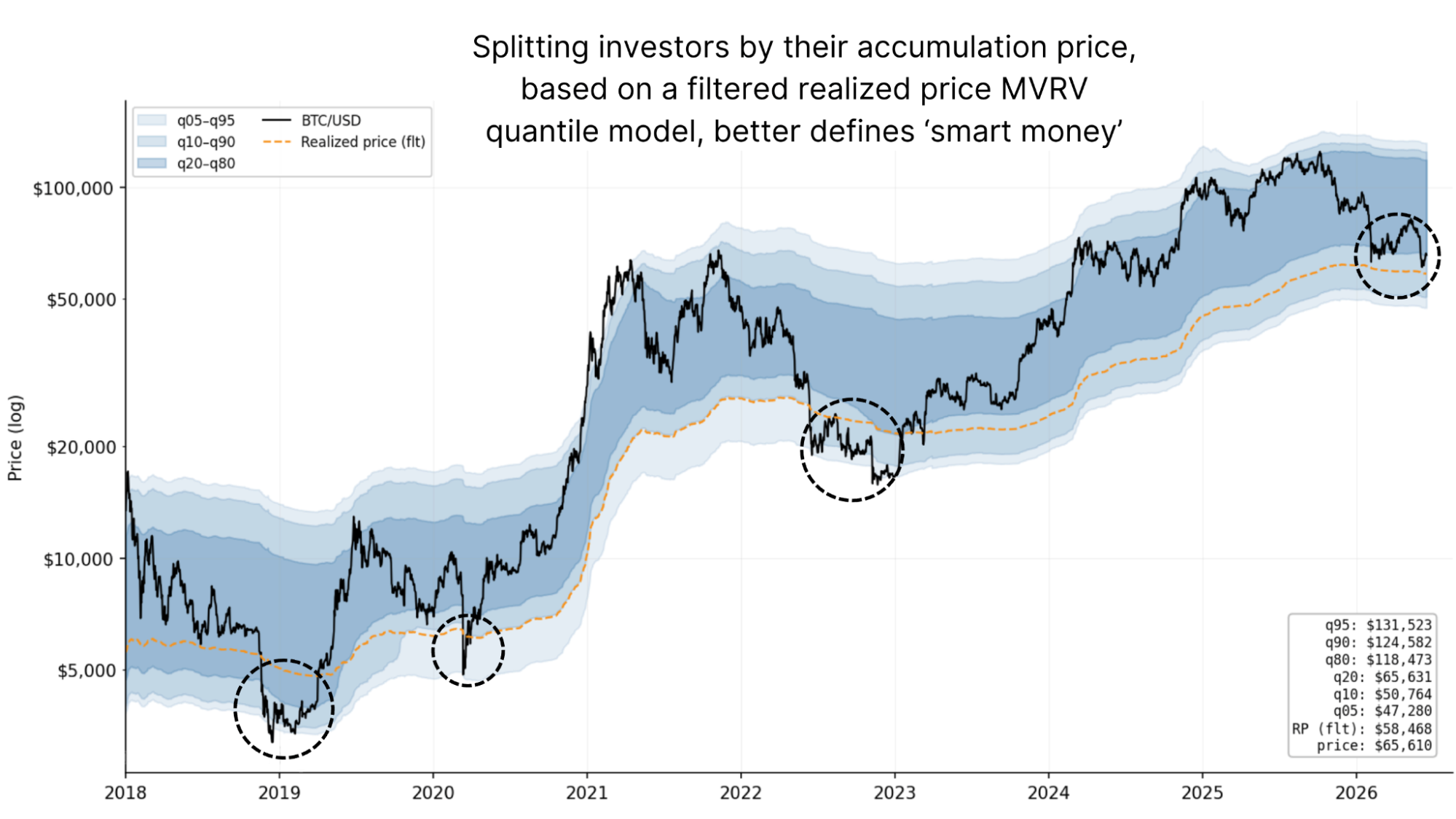
Figure 2: Using Realized Price MVRV quantiles to identify smart money.
So instead of raw values, the approach here uses quantile bands, looking not at the value itself, but at how many data points across Bitcoin's history have ever reached that level. The upper band represents readings that less than 5% of all days have ever hit. Even in the recent underwhelming cycle, the moves through $100,000 and then $120,000 registered as overvalued on this basis, precisely because Bitcoin so rarely spends time up there relative to the overall cost-basis.
Where Bitcoin Actually Gets Accumulated
When you split all Bitcoin accumulation into 20 bands, from the cheapest 5% of price action to the most expensive, the results are sobering. The vast majority of Bitcoin is accumulated in the upper regions of all price action. Only 1.6% of all Bitcoin was accumulated in the bottom 5th percentile.
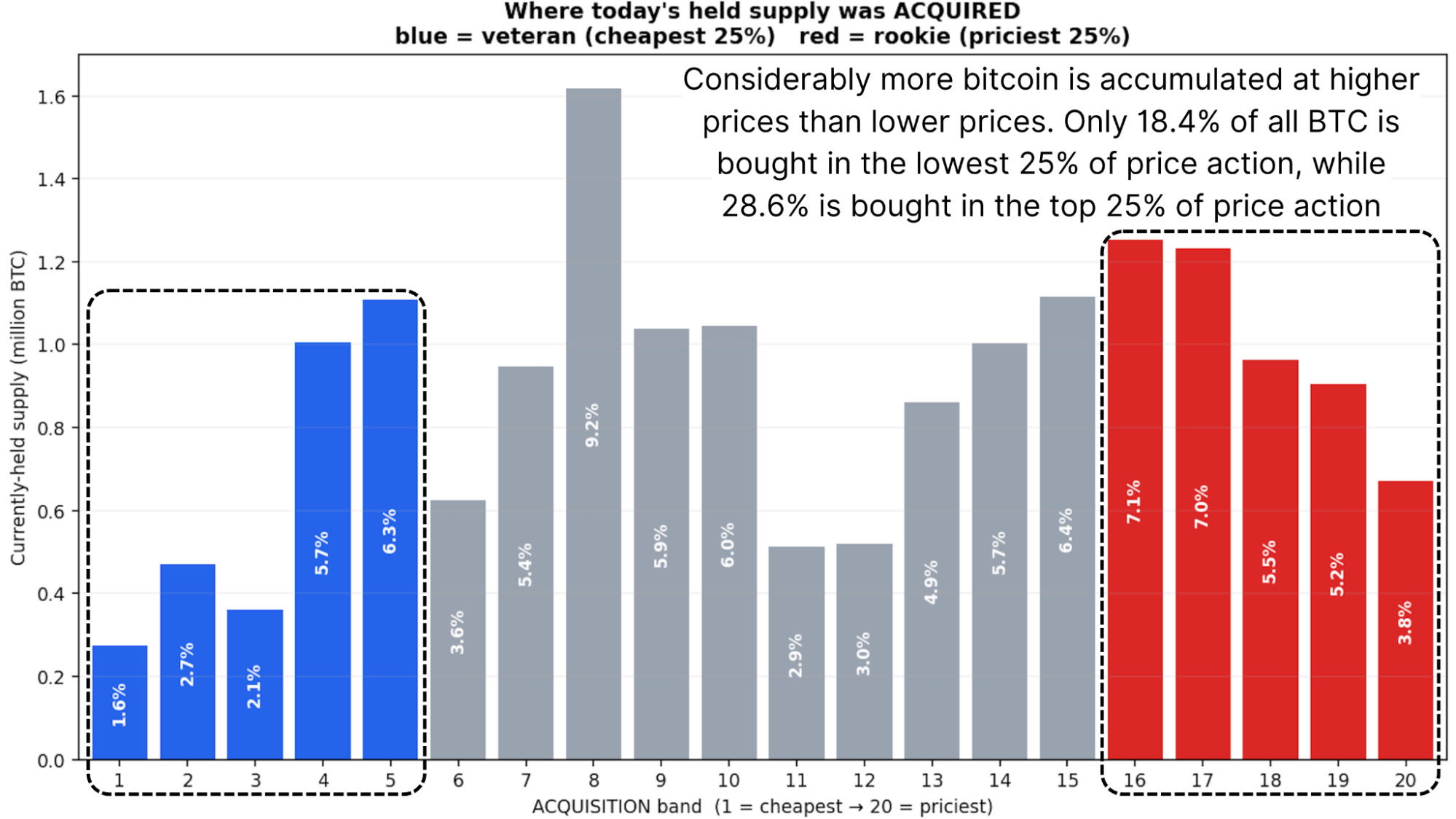
Figure 3: Held Bitcoin supply distributed across 20 acquisition price bands.
Most people, in other words, are buying high. They're not accumulating at the discounts, but they're piling in when price is already elevated, and sentiment is strong. Only 18.4% of all BTC is bought in the lowest 25% of price action, while over 28.6% is bought in the top 25%
The Matrix
Mapping where holders buy against where they eventually sell reveals just how rare genuine smart money is. The vast majority of activity is churn, with 93.3% of accumulated Bitcoin bought and then sold within the same valuation band. Of the small amount that does move bands, the average is just two and a half bands.
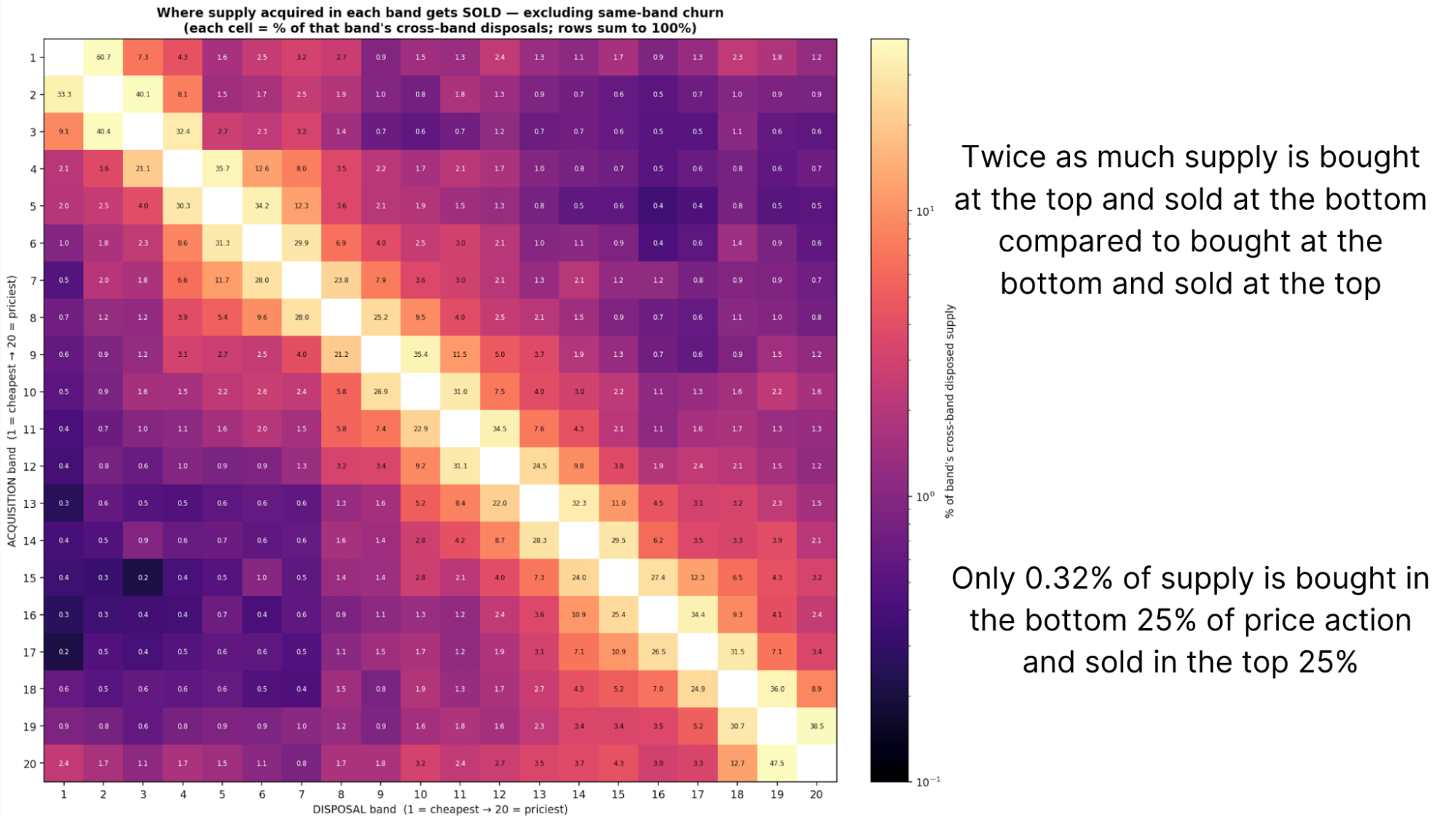
Figure 4: The cross-band disposal matrix shows where each acquisition band's supply gets sold.
Of those who bought in the bottom 5% of price action and sold later at a higher valuation band, only 1.2% managed to sell in the top 5% of price action. Meanwhile, twice as much supply is bought at the top and sold at the bottom as the reverse. Overall, only 51% of all accumulation ever led to selling at a higher price, and only 0.32% of all accumulation was in the bottom 25% of price action before distributing in the top 25% of price action!
Following the Veterans
When you isolate genuine smart-money, or ‘veterans’, those who accumulate at the lows and distribute at the highs, from ‘rookies’, a clear pattern emerges: veteran accumulation spikes at cycle bottoms. Rookie accumulation spikes at cycle tops, almost exactly as hype peaks.
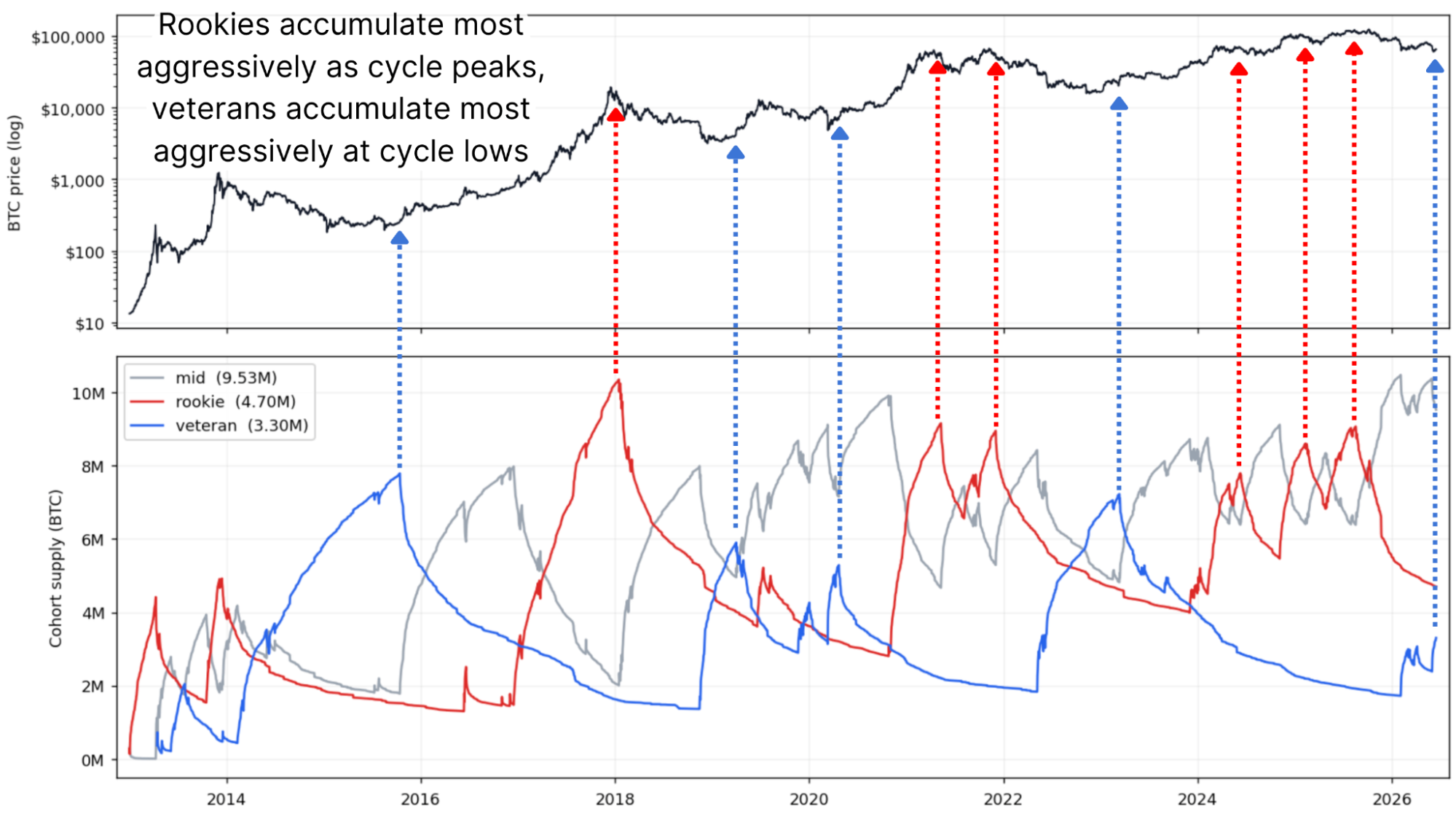
Figure 5: Rookie and veteran cohort supply plotted against Bitcoin's price cycle.
Veteran accumulation has been registering strongly, and on the quantile band measure, Bitcoin is currently sitting in the bottom 25th percentile of price action. This isn't a precise bottom-picking tool, and we could certainly go lower. But the behaviour of the most experienced cohort, combined with where price sits in its historical distribution, points clearly toward this being an accumulation zone rather than a distribution one, especially when measuring the relative rate of change in accumulation, which is currently accelerating.
Bringing It All Together
The data shows overwhelmingly that most market participants buy high and sell low, that genuine top-and-bottom timing is rare, and that the experienced cohort consistently does the opposite of the crowd. You don't need to nail the exact bottom; almost nobody ever does. You just need to take the emotion out of it, acknowledge that Bitcoin will do what Bitcoin does, and accumulate when the data says you're in the lower percentiles rather than the upper ones. Right now, that's exactly where we are.
And watch our most recent YouTube video here:
14M+ Bitcoin Is Held By Rookies — Here's What Veterans Do Differently
Matt Crosby (@MattCrosbyPro)
Director of Research & Analytics
La información contenida en este sitio no debe considerarse asesoramiento financiero. Por favor revise la Descargo de responsabilidad para más información.